
January Newsletter: ICE out, Sacramento Science Fair, and more

Dear UAW Sibling,
January has been another busy month in Region 6. In this month’s newsletter, you’ll find updates on members’ work around the Region, including action to defend our communities against ICE, expand research funding, and build political power as working people.
UAW Members Demand: Abolish ICE!
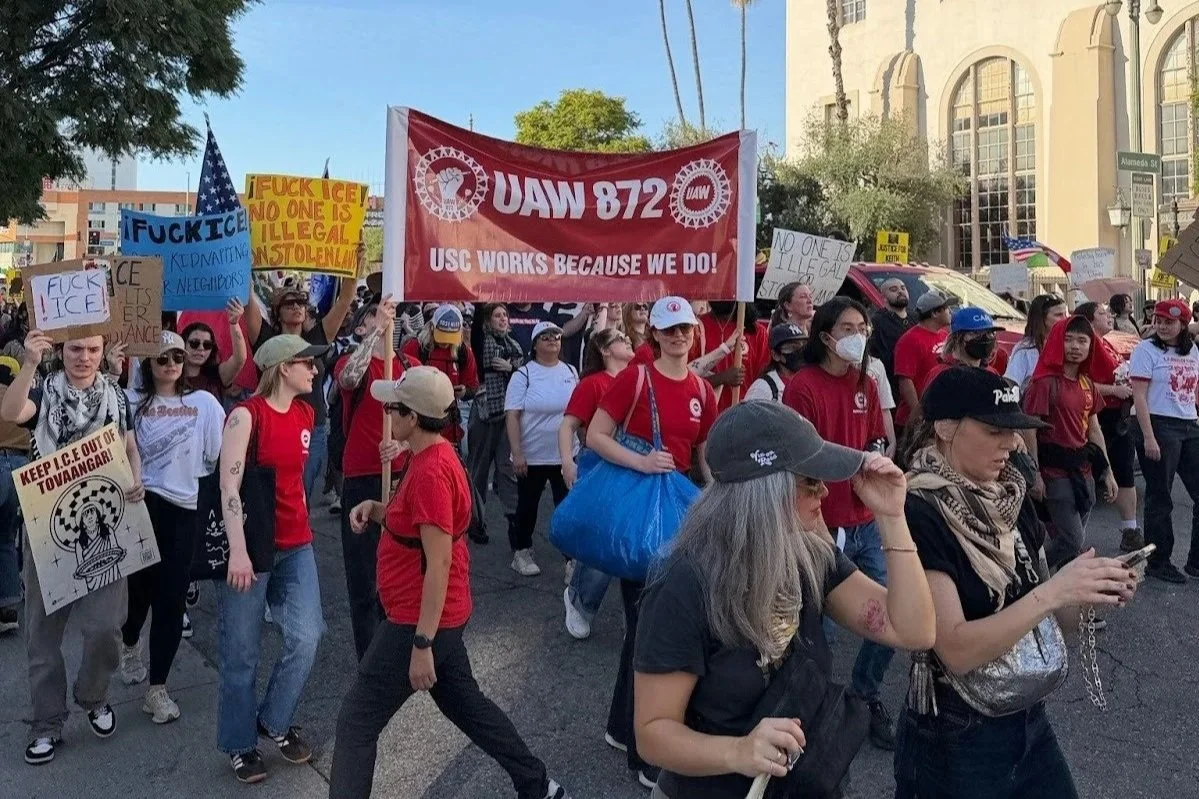
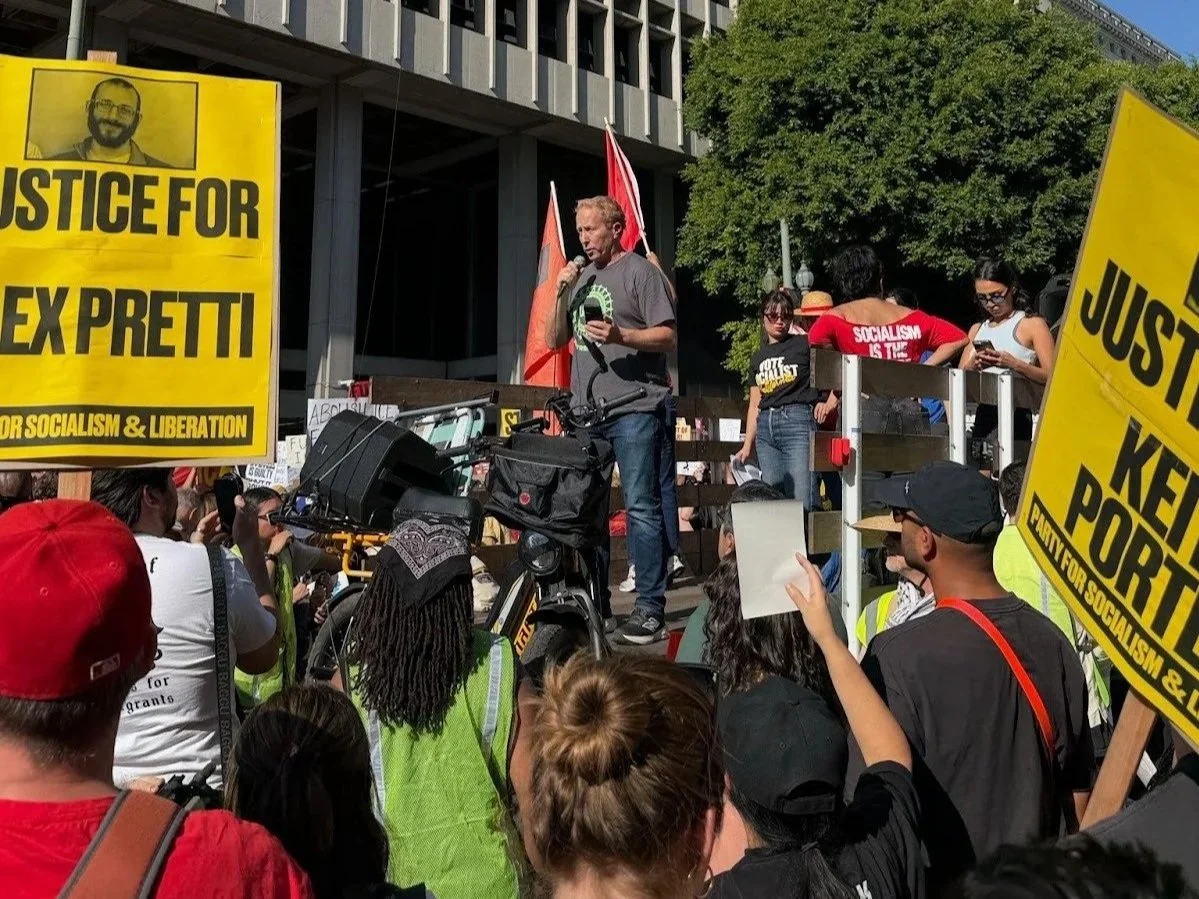
On Friday, UAW members took action to demand an end to ICE terrorizing working people, joining hundreds of thousands of our community members in cities across the Region, with Region 6 Director Mike Miller giving remarks in Los Angeles.
For months, ICE has been increasingly terrorizing communities across the U.S. – using violence, intimidation, and mayhem to sow fear, tear families apart, and attack rights to free speech and assembly. UAW members in Region 6 join millions of others across the country in mourning the killings of Alex Pretti, Renee Good, Keith Porter Jr, and the more than 30 people who died in ICE custody in 2025. When the powerful abuse their power by killing people who disagree with them, everyone’s rights and freedoms are at risk.
ICE’s recent actions are in no small part emboldened by the unprecedented $75 billion the agency received through Trump’s signature budget bill last year. Much of that is going toward massive contracts for surveillance tech companies, enriching wealthy CEOs off of the scapegoating and suffering of immigrant families. Meanwhile, the Trump administration and Republicans in Congress have gutted funding for programs all working people rely on – Medicare and Medicaid, healthcare, lifesaving research funding, veterans’ assistance, food assistance, student loan relief, and more.
Congress must vote NOon any additional funding for DHS. ICE and CBP must immediately leave Minneapolis, Los Angeles, Portland, and every other community they have been terrorizing. And Congress must immediately take action to direct federal funding to programs that uplift working people – not line the pockets of billionaires.
Save Science, Save Lives: California Science and Health Research Bond Act
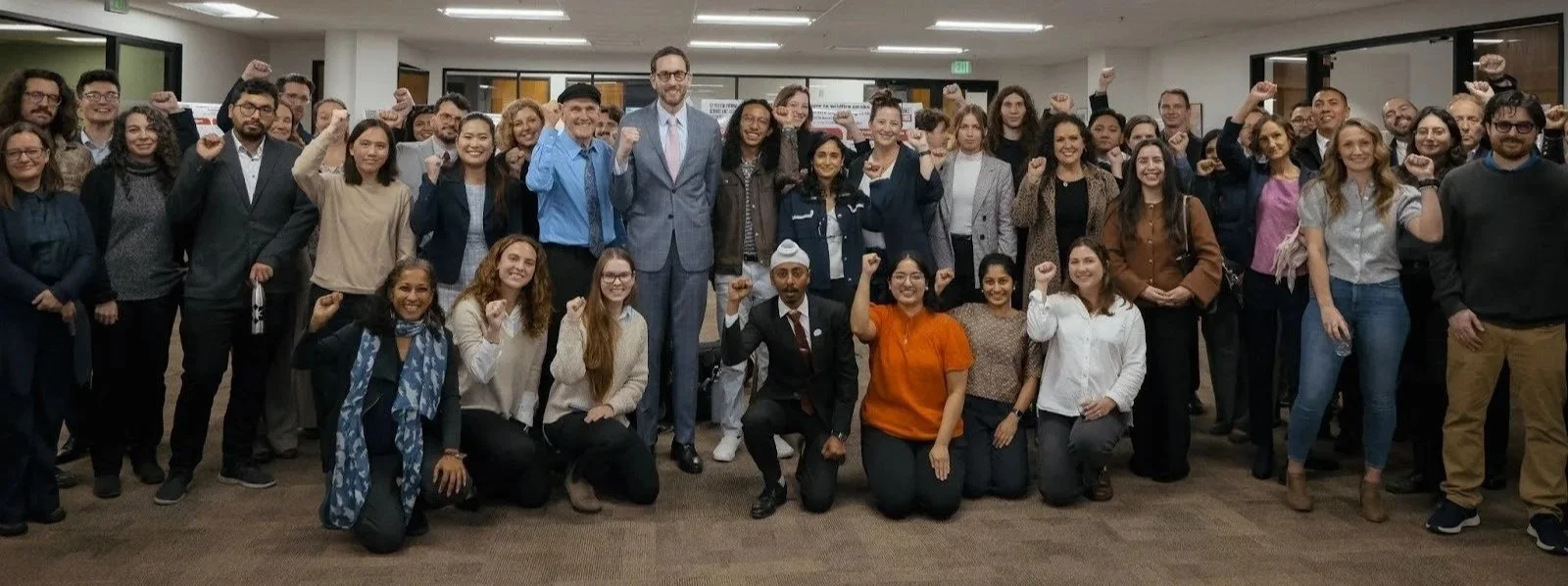
Last year, the Trump administration froze hundreds of millions of dollars in research funding, jeopardizing medical progress in areas like cancer, viral pandemics, heart disease, wildfire prevention and much much more. In November, UAW members in California launched the Save Science, Save Lives campaign – a groundbreaking effort to fund critical research in California while also increasing affordability for working people. This month, the bill (SB 895 - Wiener) was officially introduced with support from over 40 co-authors.
SB 895 would create the California Foundation for Science and Health Research to ensure that life-saving and economically-vital scientific research continues in the state, even if the federal government cuts or withholds federal funds. If passed, it would authorize up to $23 billion in General Obligation Bonds to fund research grants, loans, and facilities in medical, agricultural, environmental research and more. SB 895 also includes mechanisms that would allow Californians to directly benefit from the lifesaving research that our tax dollars fund in the form of affordable prices. It also includes requirements to return funds generated by inventions to Californians.
On January 26, UAW members traveled to Sacramento to discuss how their research has been impacted by attacks on federal funding, and to mobilize greater support for SB 895. Members visited over 40 elected officials and spoke powerfully about the importance of restoring funding and safeguarding it from meddling from Washington D.C. Later that day, members also hosted a science fair at the California Federation of Labor that showcased some 25 research projects in various areas – including medicine, agriculture, climate – that have been affected by Trump’s reckless cuts.
Katie Wilson Inaugurated Mayor of Seattle
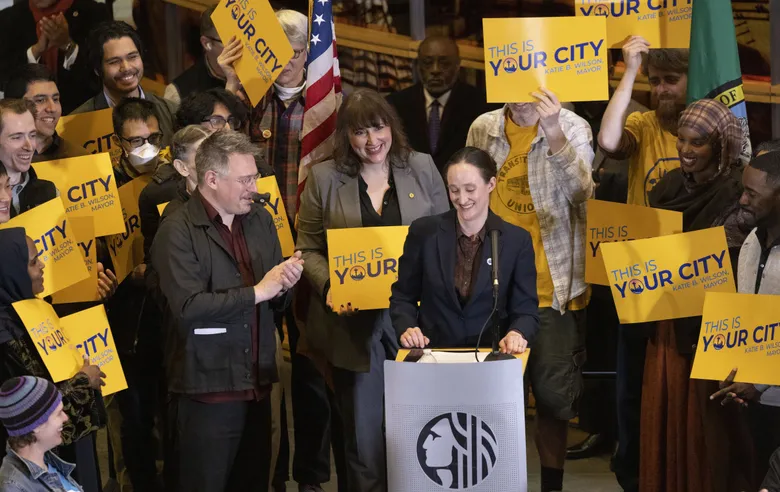
Last fall in Washington, UAW Region 6 members worked hard to elect progressive candidate Katie Wilson for Seattle Mayor. At her inauguration this month, Wilson brought together UAW members and community groups to set out a vision for the future of the city. She reaffirmed her focus on affordability and improving the quality of life for the working class, committing to “fighting to make possible a way of life where you don’t have to spend every waking moment figuring out how to pay your bills. Where you don’t have to work multiple jobs to support your kids. Where you can raise a family in an apartment because the city is your living room and the parks are your backyard and the grocery store is a short walk away.”
Wilson understands what union members know well: power is not handed down from above, but generated from below. UAW members look forward to continuing to work with Wilson to make Seattle a place where “organizers and ordinary people [can] do the work of pushing our city and our society forward, towards realizing our highest and best aspirations.”
NIH Grants Victory
Last April, UAW joined a federal lawsuit seeking to reverse the cancellation of NIH grants or grant applications that were arbitrarily frozen, denied, or withdrawn. In late December 2025, the plaintiffs and the federal government reached a settlement regarding approximately 5,400 of these NIH applications. NIH has agreed to use its standard process to make decisions on stalled applications, all of which will receive decisions by July 2026. As a result of this settlement, NIH has so far issued decisions for about 700 grants, with nearly 90% approved.
These grants address urgent public health issues, including HIV prevention, Alzheimer’s disease, LGBTQ+ health, and sexual violence. The list of impacted grants was based on surveys that UAW members filled out. If members have any questions about their grant applications, reach out to our legal counsel to follow up. Although the legal settlement addresses stalled applications, it does not address cancelled grants – and for this reason, the case continues in the courts.
History and Class Confidence
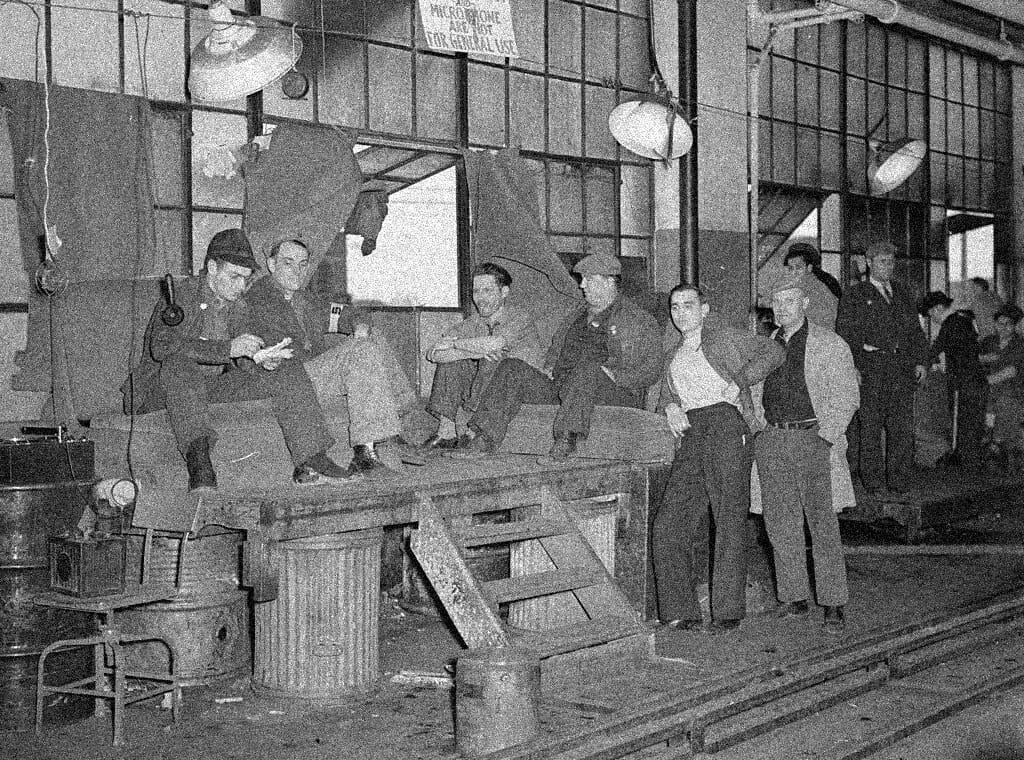
As the UAW celebrates its ninetieth anniversary this year amidst an all-out assault by the billionaire class, it is useful to turn to history to learn about some of the union’s biggest organizing victories. The most famous union win in American labor history – the General Motors Flint sit-down strike – was a product of the conditions and organizing momentum of the moment. But it was also made possible by structure building and collective experiences that generated class confidence.
In 1937, General Motors workers won a landmark agreement, which included commitments to union recognition and collective bargaining over wages, seniority, work-life balance, and other working conditions. Just a year or so prior there were many reasons to believe conditions were not ripe for a breakthrough against the world’s most powerful corporation, from low membership numbers to GM’s union-busting activities.
Revisiting the context and strategies of the successful sit-down strikes in 1936-37 can provide lessons for today’s organizing environment. In this excellent piece, UAW Region 6 organizer Garrett Shishido Strain details the environment and organizational decisions taken by movement leaders to build class confidence and lead successful sit-down strikes. He draws some key lessons for organizers today for winning tough fights against intransigent employers.
Message from Region 6 Director Mike Miller
Only a month into 2026, UAW members across Region 6 have been busy organizing to win a political economy that puts the needs of all working people – not billionaires – first. As the Trump administration continues pouring money into lawless ICE violence and giveaways for wealthy CEOs, UAW members are stepping up and building a mass movement to fight back using multiple sources of leverage. In the streets, members are joining hundreds of thousands of others in our communities to take on ICE, and at the bargaining table, members are fighting to win expanded protections for international and immigrant workers. In the halls of legislature, Region 6 workers are fighting to secure funding for lifesaving research work, to enshrine collective bargaining rights for new groups of workers, to tax the rich instead of cutting budgets on the backs of working people. Members are actively organizing to elect candidates who will be real champions for working people – and to hold those already in office to support our issues. And all across the Region, thousands of workers are organizing every day to form new unions. Each of these fights is critical in its own right, and all together they are building greater and greater capacity for workers to have a real say over how our society is run.
This year will have a number of critical opportunities for building worker power and growing our movement. I hope to see you at the Region 6 Political Action and Leadership Conference (April 25-26 at the Region 6 Office in Pico Rivera, CA), where members from across the Region will come together to strategize how we can dramatically expand mass worker action and advance an agenda that centers the needs of working people.
More Updates from Around the Region
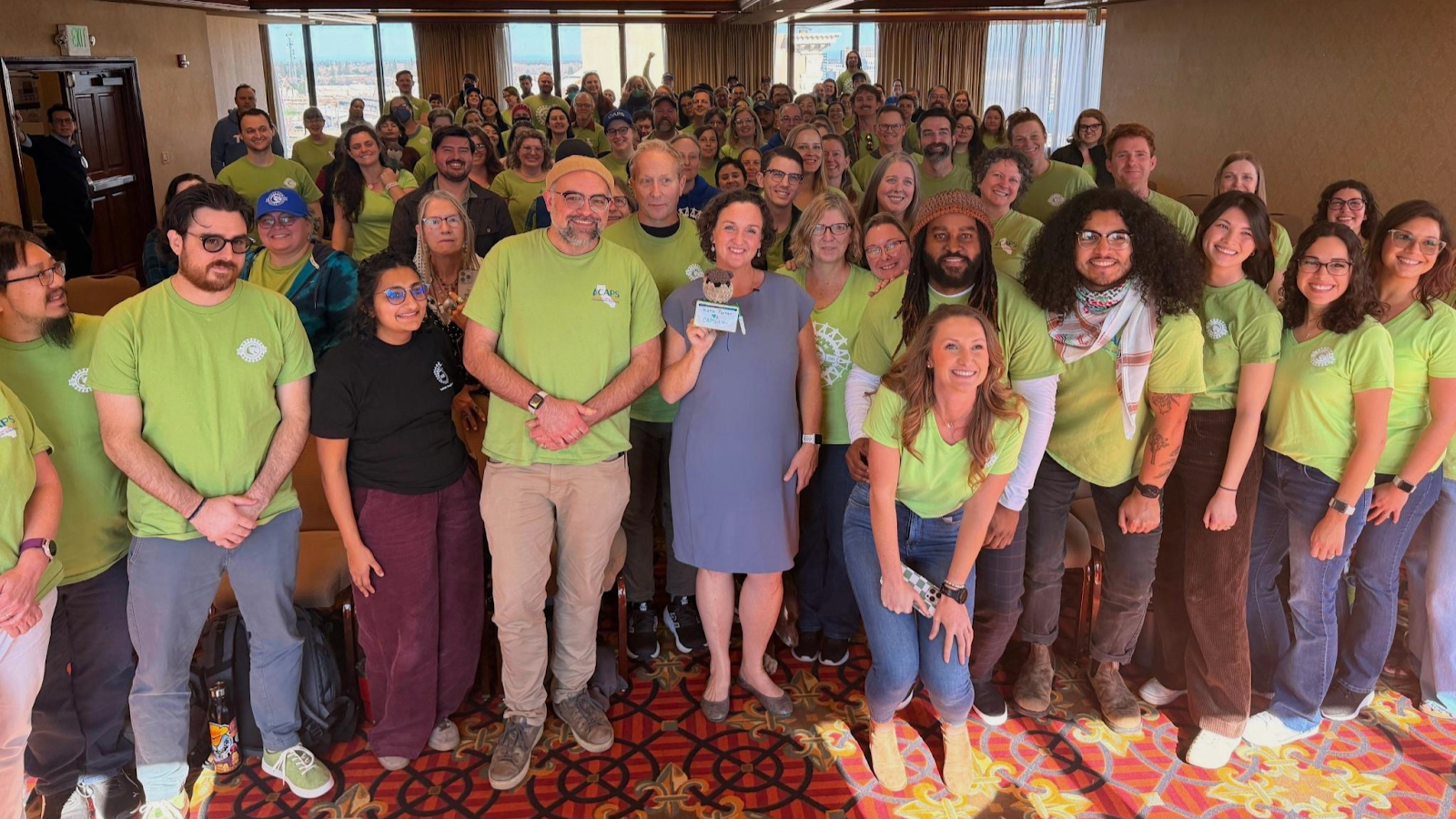
CAPS-UAW Town Hall with Katie Porter: This month approximately 200 CAPS-UAW members met with UAW-endorsed Gubernatorial Candidate Katie Porter. Members discussed topics such as RTO, wages, closing the gender pay gap, and protecting scientific integrity in California. CAPS-UAW members look forward to continuing to partner with Porter and working to make the State of California the employer of choice for scientists.
Strike Authorization Vote at UC: After months of bargaining, Academic Student Employees, Student Services Advising Professionals, and Research and Public Service Professionals at UC will be voting on strike authorization starting February 5. Hear from UC workers why they’re voting YES.
Washington: Pass the Millionaires Tax! UAW members at University of Washington (Local 4121), Washington State University (Local 4591), and Western Washington University (WAWU-Local 4929) are coming together to build a statewide fight for progressive revenue. This month, presidents of all three Locals gave testimony on the governor’s proposed budget, opposing proposed funding cuts to higher ed and calling for the state to pass a millionaire’s tax instead of balancing the budget on the backs of working students and families.
Expanding Collective Bargaining Rights in WA: This month, members of WAWU-Local 4929 also lobbied legislators about passing HB 1570, which would enshrine collective bargaining rights for 1100 Operational Student Employees at Western Washington University and enable them to bargain equitable rights and protections with their fellow Educational Student Employees.